About Acro.mance
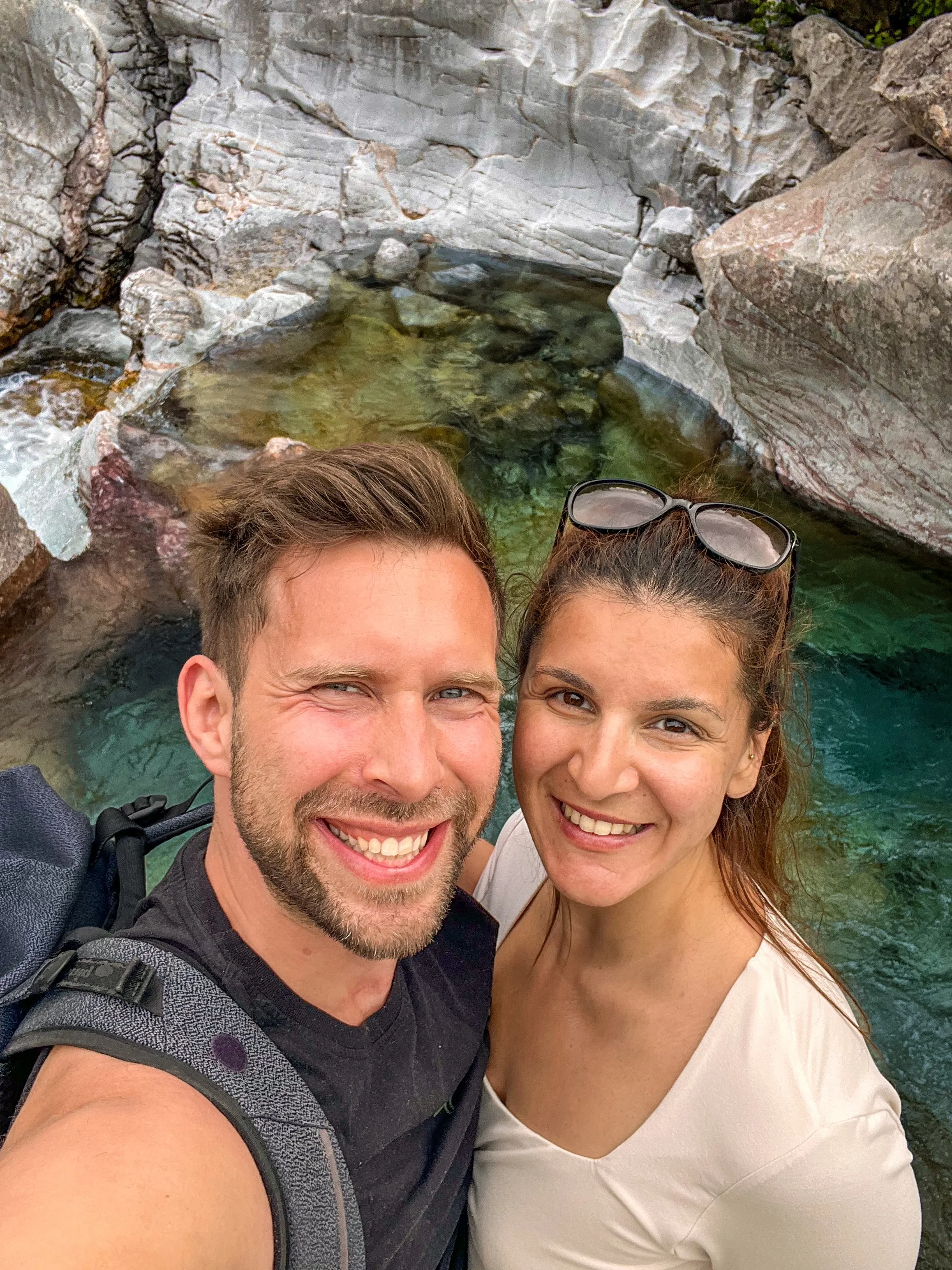
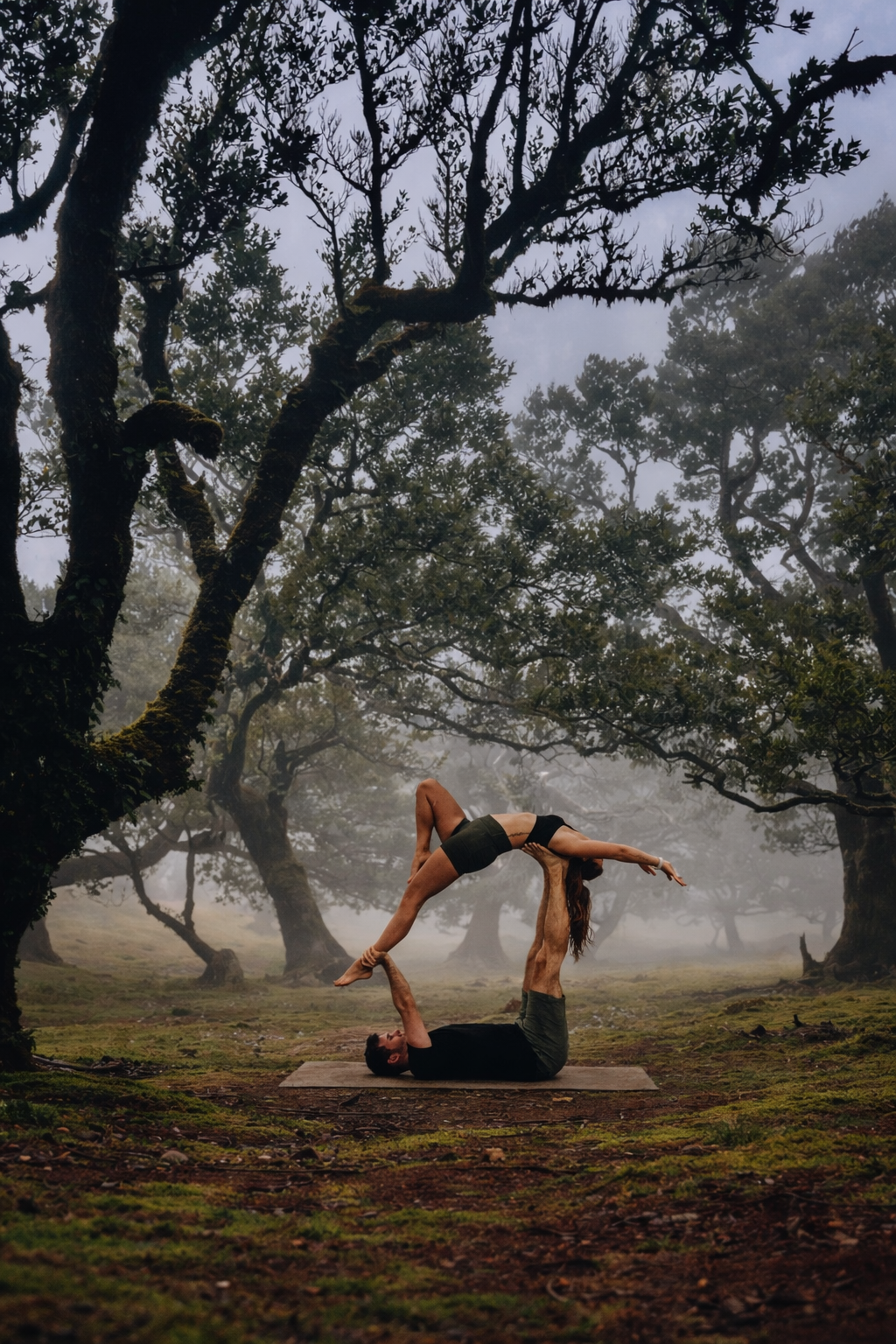
We’re Scheki & Micha – and our journey with AcroYoga started just like yours might be starting now: curious, a little unsure, but excited to try something new.
When we first began practicing AcroYoga together, we didn’t really know what to expect. Today, we can honestly say it has changed us in so many ways. Of course, we’ve become stronger, more flexible, and more aware of our bodies. But that’s only part of the story.
AcroYoga has helped us grow as a team and as a couple. We’ve learned how to truly listen to each other, communicate clearly, and build trust – especially in moments when things don’t go perfectly. Because that’s part of the process: trying, laughing, sometimes failing, and then getting back up together.
One of the most powerful parts of this journey has been learning how to deal with fear. In the beginning, it takes courage to trust someone to hold you or to support another person. But that’s where the magic happens: with every small challenge, you don’t just build trust in your partner, but also in yourself.
For us, AcroYoga is so much more than just movement – it’s connection, growth, and a lot of fun.
With this guide, we want to make it as easy as possible for you to get started. We want to give you a solid foundation, help you feel safe, and inspire you to just begin. You don’t need to be perfect, strong, or flexible – you just need to start.
We’re happy to be part of your journey.
— Scheki & Micha
What is AcroYoga?
AcroYoga is a relatively young practice that emerged in the United States around the turn of the millennium and has since spread worldwide. Its name combines 'acrobatics' and 'yoga' – but that barely scratches the surface. AcroYoga is more than the sum of its parts. It's a discipline that uniquely weaves together three elements: the body wisdom of yoga, the playful physicality of acrobatics, and the healing dimension of Thai massage.
At its core, AcroYoga requires at least two people: a Base who carries, and a Flyer who is carried. In practice, there is often also a Spotter – a third person who provides external safety, support, and observation. These three roles form a living system of give and take, of trust and responsibility.
What distinguishes AcroYoga from pure acrobatics is the quality of connection. In acrobatics, it's about precision, performance, spectacle. In AcroYoga, it's about contact: becoming aware of the other body, the language of touch, breathing together. It's no wonder that AcroYoga is often described as 'Moving Meditation for Two'.
The Three Roles in Detail
The Base
The Base is the foundation – the earth on which everything rests. They typically lie on their back, though there are also standing poses for Bases. Their task is stability: calm, responsive strength that gives the Flyer a safe space. A good Base breathes steadily, communicates clearly, and responds sensitively to the smallest weight shifts of the Flyer. The Base doesn't carry – they hold. This is an important distinction, because holding requires sensitivity, not just strength.
The Flyer
The Flyer is what most people would describe as 'the person on top'. But flying begins long before takeoff: with trust, with conscious body tension, and with the ability to let go. Good Flyers aren't necessarily lightweight – they are body-aware. They know where their center of gravity is, can shift it deliberately, and have learned to remain calm even in unfamiliar positions.
The Spotter
The Spotter is the invisible pillar role in AcroYoga – often underestimated, but invaluably valuable. A good Spotter stands to the side of the duo, observes the entire pose, and intervenes precisely when something isn't right. They don't bear any load – they provide safety through presence. For beginners, a Spotter is highly recommended for every new pose. With growing experience, the situation determines when a Spotter is needed and when not. AcroYoga begins where you stop being alone.